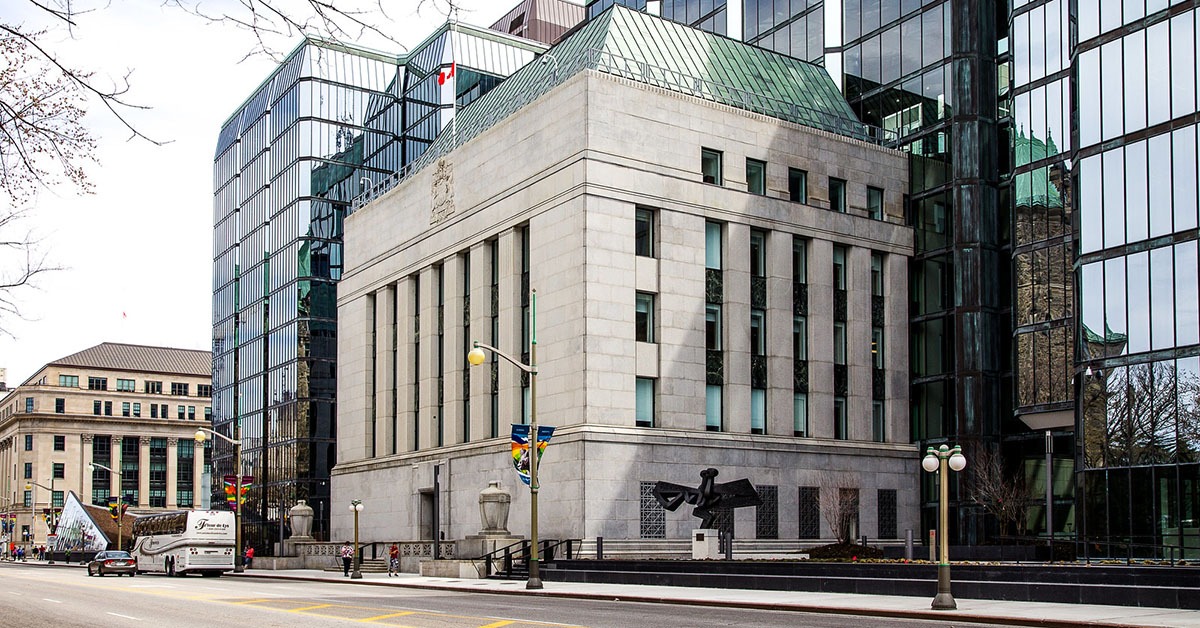
Bank of Canada announces 25 point rate cut, says structural change is needed
OTTAWA—The Bank of Canada set their target for the overnight rate to 2.25 per cent on Wednesday. This marks a 25 basis point reduction from September and a one per cent overall reduction from the beginning of the year, reflecting continued concerns about the economic impact of Canada-US trade relations.
“Governing Council sees the current policy rate at about the right level to keep inflation close to two per cent while helping the economy adjust through this period of structural change,” said Tiff Macklem, governor of the Bank of Canada, at a press conference for the October 2025 Monetary Policy Report.
This report is also the first time since the beginning of the trade war that the bank has published a single baseline outlook instead of a range of possible scenarios. “While US trade policy remains unpredictable, its impacts are becoming clearer,” said the governor.
The economy shrank in the second quarter due to a decline in private investment and exports. It is expected to rebound slightly with weak GDP growth of about 0.75% forecast for the remainder of 2025, largely bolstered by “resilient” consumer spending according to the report.
In the September Labour Force Survey released earlier this month, there were 60,000 additional jobs in September, slightly offseting two consecutive months of losses totalling 106,000 jobs in July and August. Sectors affected by rising barriers to trade including auto manufacturing, steel, aluminum and lumber continued to see significant losses according to Macklem. General Motors and Stellantis also announced plans in October to move production away from Ontario to the United States, with over 4,000 jobs lost across the two plants.
Stephen Williamson, professor of economics and Stephen A. Jarislowsky Chair in Central Banking at Western University, said in an interview that there is a limit to how much loose monetary policy can offset economic growth lost to tariffs, especially if the Bank of Canada’s forecast holds. “Suppose this tariff protection is permanent, there’s a whole lot of adjustment that needs to happen in the economy,” said Williamson. “It’s a long term process.”
With uncertainty as a continuing crutch, the federal budget set to be announced next Tuesday will give some indication as to how the current government plans to address the lack of projected growth through fiscal policy, while efforts to forge stronger trade relationships in Southeast Asia and Europe are ongoing.
“We need to be humble about our forecasts,” said Macklem at the press conference. “If the outlook changes, we are prepared to respond.”
Post a comment